
The Hidden Cost of Missed Walks: A Reliability Playbook
Missed walks aren’t small mistakes—they drive churn, refunds, and reputation damage. Use a reliability framework to protect trust and stabilize bookings.
Why “One Missed Walk” Is Never Just One

A missed visit isn’t only a calendar slip—it’s an operations failure that ripples through your week. The immediate cost is visible (refunds, rescheduling, unpaid travel time), but the hidden cost is larger: interrupted routines, anxious owners, and a perceived lack of control. In a relationship business like pet-care-business, reliability is the product; when it breaks, clients quietly start shopping.
What makes this especially expensive is compounding. One late arrival creates message backlogs, pushes the next stop off-time, and increases the chance of another miss. Meanwhile, every “Just checking—are you on your way?” text becomes an unplanned support ticket. Over time, this erodes client-trust, lowers repeat bookings, and increases cancellations.
The good news: reliability is a system, not a personality trait. With the right scheduling habits—buffers, confirmation cadence, backup coverage, and clear rules—you reduce no-shows and give owners the consistent, auditable updates that keep them loyal.
A Practical Reliability Framework: Buffers, Confirmations, and Rules
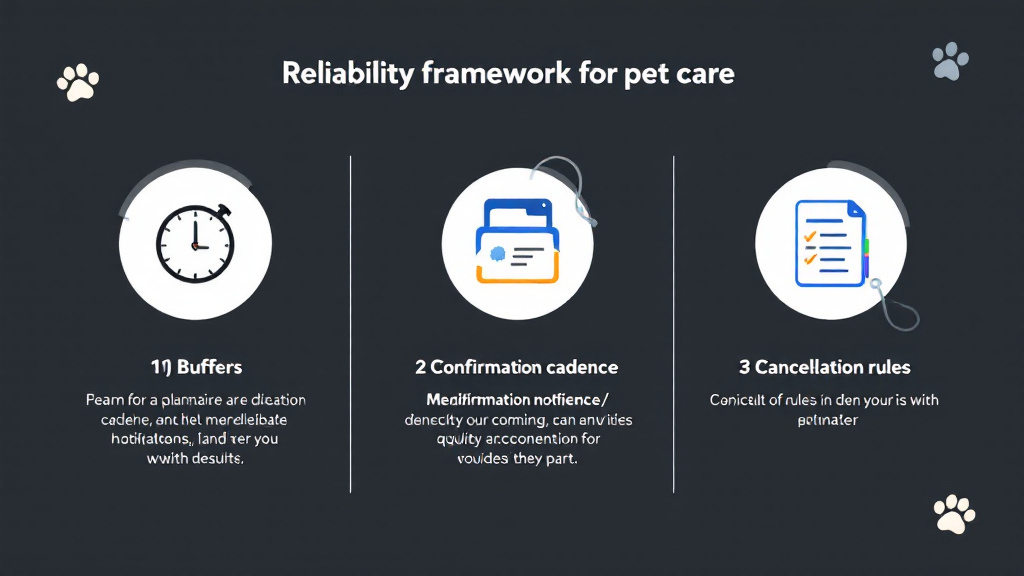
Start with buffers. Build travel-time padding into every route (even in the same neighborhood) and treat it as non-negotiable. A simple standard—like a 10–15 minute buffer between visits—prevents one delay from cascading. Then add capacity guardrails: cap daily stops, set realistic service windows, and avoid stacking recurring clients at the same time unless you have coverage.
Next is confirmation cadence, the quiet engine of client-trust. Confirm recurring schedules automatically, send a same-day reminder with an ETA window, and close the loop with arrival/departure timestamps plus photos and notes. This reduces “Where are you?” messages and turns your scheduling into an auditable record.
Finally, clarify cancellation rules in plain language: cutoff times, fees, weather policies, and access expectations (keys, parking, gate codes). When rules are consistent, clients feel treated fairly—and you protect your revenue and planning. In pet-care-business, clear policies aren’t harsh; they’re how you deliver reliable care at scale.
Backup Coverage + Shared Visibility: Turning Reliability Into a Growth Engine

Even great systems need a plan for the unpredictable: illness, traffic, door-code issues, and last-minute client changes. Backup coverage is the difference between a hiccup and a lost customer. Maintain an on-call list (a trusted peer, part-time teammate, or vetted subcontractor), define handoff steps (pet profile, access notes, routine, payment status), and rehearse the swap so it’s fast and safe.
Shared visibility makes backup coverage workable. When schedules, pet profiles, and client messages live in one place, you reduce scramble and risk. Tools like OnTime Paws Care are designed for this workflow: recurring bookings in a single calendar, structured pet records (allergies, vet info, home access), and automated confirmations plus post-visit updates with photos and timestamps. That combination reduces anxiety for owners while protecting your team’s operations.
Reliability isn’t just risk management—it’s marketing. Consistent updates, fewer misses, and transparent policies lead to better reviews, more referrals, and higher retention. In pet-care-business, dependable scheduling is what turns first-time bookings into long-term subscribers.